The Early Days of Computer Technology
Today, computers are an essential part of our daily lives. We use them to browse the internet, write documents, watch videos, play games, communicate with others, and perform millions of calculations every second. However, computers did not appear overnight. Their history stretches back thousands of years, beginning with simple tools created to help people perform calculations. This lesson explores the very beginning of computer technology and how the first computing devices laid the foundation for the modern computers we use today.
The First Calculating Tool: The Abacus
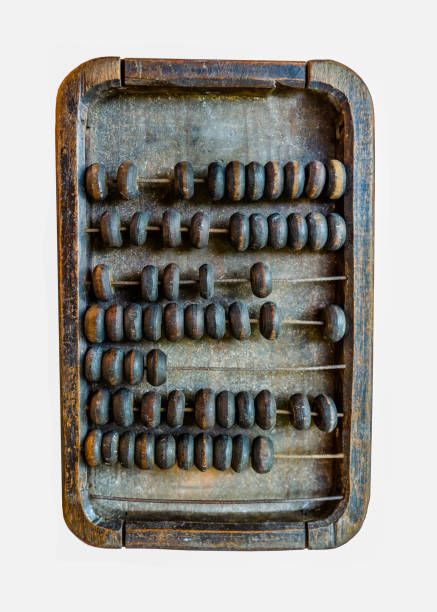
The earliest known calculating device was the abacus, invented around 2500 BCE in ancient Mesopotamia. It later spread to many civilizations, including China, Greece, Rome, and Japan, where different versions were developed.
An abacus is a simple frame with rods or wires containing movable beads. By sliding the beads into different positions, people could perform arithmetic calculations such as addition, subtraction, multiplication, and division.
Although the abacus does not store information or execute instructions automatically, it greatly improved the speed and accuracy of calculations compared to doing them entirely by hand.
For thousands of years, merchants, traders, accountants, and scholars relied on the abacus for everyday mathematical work.
Mechanical Calculators
For many centuries after the abacus, calculations were still performed manually. As trade, science, and astronomy became more advanced, people began looking for machines that could perform calculations automatically.
In 1642, French mathematician and inventor Blaise Pascal invented one of the first successful mechanical calculators, known as the Pascaline.
The Pascaline used a series of gears and wheels to perform addition and subtraction. When one wheel completed a full rotation, it automatically carried a value to the next wheel, similar to how numbers carry over in normal arithmetic.
Although the machine was expensive and difficult to manufacture, it proved that mechanical devices could perform mathematical calculations without relying entirely on human effort.
A few decades later, in 1673, German mathematician Gottfried Wilhelm Leibniz improved upon Pascal's design by creating the Stepped Reckoner.
This machine could perform addition, subtraction, multiplication, and division using a special mechanism called the Leibniz wheel. While it was not widely adopted because of mechanical limitations, it introduced ideas that influenced future calculating machines.
The Difference Engine
By the early 1800s, mathematics had become increasingly important for navigation, engineering, astronomy, and scientific research. Large mathematical tables were calculated by hand, but these tables often contained errors.
To solve this problem, English mathematician Charles Babbage designed the Difference Engine in 1822.
The Difference Engine was a large mechanical machine built from thousands of gears, shafts, and wheels. Its purpose was to automatically calculate mathematical tables with greater accuracy than humans could achieve by hand.
Instead of relying on manual calculations, the machine followed a fixed mechanical process to generate correct numerical values.
Although the complete machine was never finished during Babbage's lifetime because of manufacturing limitations and funding problems, the Difference Engine demonstrated that machines could perform complex calculations automatically.
The Analytical Engine
While working on the Difference Engine, Charles Babbage realized that a much more powerful machine could be built.
Around 1837, he designed the Analytical Engine, a machine that is widely considered the first design for a general-purpose mechanical computer.
Unlike earlier calculating machines, the Analytical Engine was not limited to one specific task. It was designed to solve many different kinds of mathematical problems by following a sequence of instructions.
The design included several features that are also found in modern computers:
- A processing unit to perform calculations.
- A memory section to store numbers.
- An input system using punched cards.
- An output system for printing results.
- The ability to repeat instructions and make decisions based on conditions.
Although the Analytical Engine was never completed because the engineering technology of the time was not advanced enough, its design contained many of the fundamental ideas used in modern computers.
Ada Lovelace: The First Computer Programmer
While studying Charles Babbage's Analytical Engine, English mathematician Ada Lovelace recognized that the machine could do much more than simple arithmetic.
In 1843, she wrote a detailed set of instructions describing how the Analytical Engine could calculate a sequence of numbers known as Bernoulli numbers.
These instructions are widely considered to be the world's first published computer program.
Ada Lovelace also predicted that future computing machines might be able to create music, process symbols, and perform tasks beyond mathematics. This was an extraordinary idea at a time when no programmable computer had yet been built.
Because of her pioneering work, Ada Lovelace is often called the world's first computer programmer.
Why These Early Machines Were Important
The earliest calculating devices were very different from today's computers. They had no electronic circuits, no screens, no keyboards, and no software.
However, each invention introduced an important new idea.
The abacus showed that tools could assist humans with calculations.
Mechanical calculators demonstrated that machines could perform arithmetic automatically.
The Difference Engine proved that machines could generate accurate mathematical results without human calculation.
The Analytical Engine introduced the concept of a programmable machine with memory, a processor, input, and output, ideas that form the foundation of every modern computer.
Although these early inventions were limited by the technology available at the time, they established the principles that eventually led to the development of electronic computers in the twentieth century.
In the next article, we will explore how punched cards, electromechanical machines, and the first electronic computers transformed these early ideas into practical computing systems.